


LP financing in Luxembourg: a guide for lenders and sponsors
ON THIS PAGE

Limited partner (LP) financing has become a growing feature of the Luxembourg fund finance market, offering liquidity and strategic flexibility for asset managers, retail and institutional investors, including high-net-worth and ultra-high-net-worth individuals.
As a leading funds domicile, Luxembourg offers a variety of products to meet investor needs. But unlike many fund-level products, LP financing involves lending, directly or indirectly, to limited partners, secured over their partnership interests and related rights.
Structuring LP finance transactions in Luxembourg presents distinctive legal and commercial considerations. This guide provides practical insights on the key structuring features and risk factors to consider and highlights the key issues for lenders and sponsors.
What is LP financing?
LP financing refers to lending arrangements where the financing is made not to the fund but to the limited partner, who holds the limited partnership interests. To secure the borrowing obligations of the LP, the lender will usually take security over the LP's partnership interest(s) and ancillary rights.
At Ogier, we see this type of financing being used both on an individual basis – where the private wealth branch of asset managers offers it to private clients (see example 1) – and at larger scale through management incentive programmes (example 2). These programmes enable key persons or rising star employees to become limited partners in one or more funds, with financial support provided for their subscription of limited partner interests.


Structuring LP Finance transactions in Luxembourg
The development of LP finance is not specific to Luxembourg - it's a well-known product in other jurisdictions such as the US. However, when the investment fund issuing the limited partner interests is a Luxembourg based entity, some factors need to be considered.
At Ogier, we advise market players with a variety of fund structures taking different corporate forms, such as 'société d'investissement à capital variable' or 'société en commandite par actions', as well as structures subject to product laws such as specialised investment funds.
In this example, we will explain how LP financing could work for an unregulated alternative investment fund with the corporate form of a special partnership limited by shares - the 'société en commandite spéciale' (SCSp).
The SCSp has become the default choice for alternative asset managers in Luxembourg whether the strategy relates to private equity, private debt, infrastructure or real estate. Its flexibility is rooted in the Luxembourg Law of 10 August 1915 on commercial companies as amended (the Luxembourg Commercial Companies Law) and its contractual freedom and lack of legal personality make it attractive to both sponsors and investors.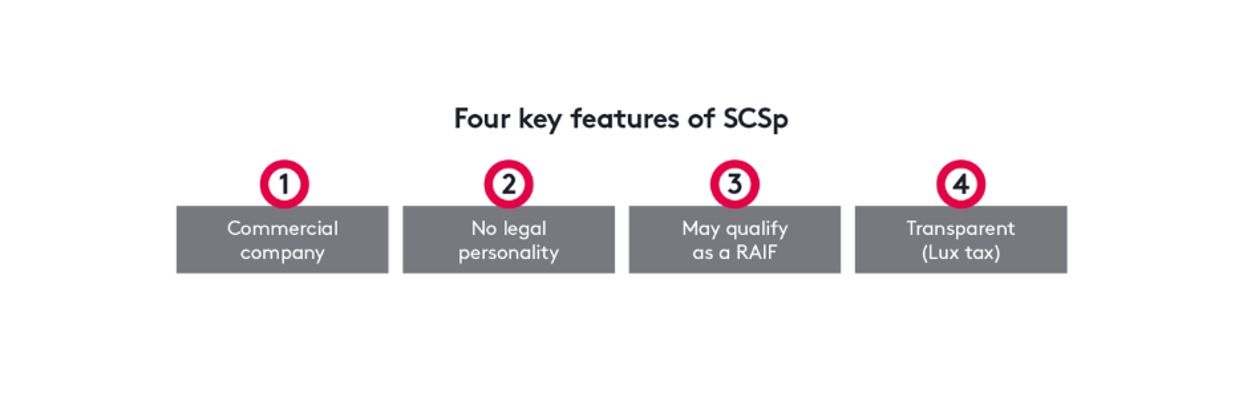
How robust is your security package?
At the term sheet stage, lenders typically know the type of security interest they require. Lenders want to pledge the partnership interests they are financing and ensure, that, in case of default, they can benefit from the value of those partnership interests.
However, the practical implementation of this can present unexpected challenges. Such challenges may relate to the specific business relationship the lender has with the limited partner, whether such limited partner is a senior member of the management within the lender's group of company or a cherished private wealth client.
Other challenges may come from the conditions set forth in the constitutional documents of the Luxembourg investment fund and notably its limited partnership agreement. We have seen situations, where faced with such constraints, the lender decided to pledge only distributions linked to the relevant LP interest rather than the LP interest itself.
With this in mind, here are some considerations to anticipate in the context of a fund financing.
Does a GP need to consent the granting of a pledge?
According to the Luxembourg Commercial Companies law, limited partners in an SCSp may only pledge their partnership interests in accordance with the terms set out in the limited partnership agreement (LPA). If the limited partnership agreement does not address this, any pledge of a limited partner’s interests requires the approval of the general partner (GP). As a result, it is essential to check if the general partner's consent is needed before negotiating the pledge agreement.
In practice, most limited partnership agreements require the GP's prior consent to create a valid pledge. This prior consent ensures compliance with know-your-clients (KYC) requirements, tax issues and mitigates competition issues. Parties should always check if this consent can be obtained before proceeding.
What about the remedies offered to the pledgee in case of default?
Once the question of the GP consent is clarified, the pledge arrangement will be prepared based on the Luxembourg law of 5 August 2005 on financial collateral arrangements, as amended (the Luxembourg Collateral Law). This provides for a flexible, creditor-friendly framework allowing out-of-court enforcement.
The Luxembourg Collateral Law provides several ways to enforce security, including, since the law of 20 July 2022, enforcement by way of redemption. This means that if enforcement is needed, a pledgee can request that the pledged LP interests may be redeemed at a price determined in accordance with the fund documents. This is one of the advantages of the Luxembourg Collateral Law.
In LP financing, the security package usually goes beyond the pledge of limited partnership interest. Lenders can also require that economic rights attached to those interests - such as distributions, dividends or redemption proceeds - are also secured. This is often achieved by redirecting such proceeds into a bank account pledged in accordance with the Luxembourg Collateral Law.
What about the impact of LP exclusion mechanisms and other LPA provisions?
Some LPAs allow for a limited partner to be excluded or have its interest reduced in cases of insolvency, default on capital calls, or similar financial difficulties. In certain structures involving parallel funds, the GP may have the discretion to transfer a limited partner from one parallel fund to another.
In this instance, any parties involved in LP financing should assess the impact of such a mechanism on the LP financing. Also, keep in mind when negotiating the security package that the limited partnership agreement might be amended from time to time without the lender's or investor's consent. Lenders might wish to neutralize negative impact of such amendments (including when they occur by way of side letter) on the contemplated financing.
More boiler-plate provisions of LPA, such as confidentiality representations or arbitration clauses, should also be factored in the lender's assessment of the credit risk.
How Ogier can help
This article is not an exhaustive overview of all considerations for LP financing. For tailored advice on LP finance or any fund finance matters, contact Jad Nader or Laura Archange.
Ogier's Banking and Finance team in Luxembourg provides end-to-end support across the full spectrum of fund finance, whether it's subscription line financing, NAV financing, hybrid, GP financing or LP finance.
Supported by a global network spanning key financial centres - including the Cayman Islands, Guernsey, Jersey and Ireland - we are uniquely positioned to provide integrated legal advice on Luxembourg and international financial structures, supporting clients throughout the full lifecycle of their investments.
Our team is recognised for its technical expertise, industry knowledge, and responsiveness, consistently ranked among the top firms for banking and finance by Chambers, Legal 500, Leaders League and IFLR1000.


About Ogier
Ogier is a professional services firm with the knowledge and expertise to handle the most demanding and complex transactions and provide expert, efficient and cost-effective services to all our clients. We regularly win awards for the quality of our client service, our work and our people.
Disclaimer
This client briefing has been prepared for clients and professional associates of Ogier. The information and expressions of opinion which it contains are not intended to be a comprehensive study or to provide legal advice and should not be treated as a substitute for specific advice concerning individual situations.
Regulatory information can be found under Legal Notice
Sign up to receive updates and newsletters from us.
Sign up